
🧮 The Role of Boolean Logic & Prime Numbers in Computer Science (2026 Guide)
The Complete 10,000+ Word Guide to Understanding How Mathematics Powers Computing
📖 Complete Roadmap: Math in Computer Science
🧮 1. Introduction: Why Mathematics Matters in Computer Science
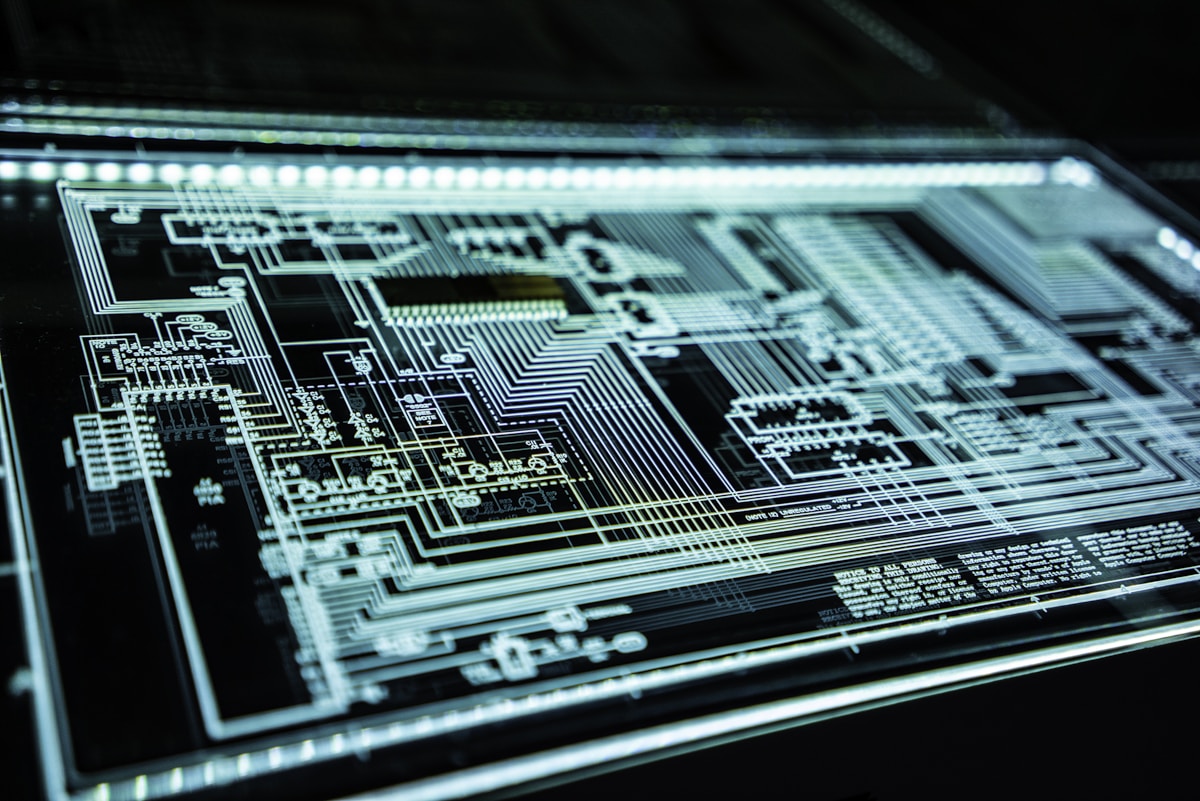
At the heart of every computer, every smartphone, and every digital system lies a beautiful mathematical foundation. Two concepts stand out as particularly fundamental: Boolean logic and prime numbers. Understanding the role of Boolean logic and prime numbers in computer science is essential for anyone who wants to truly comprehend how computers work.
Boolean logic and prime numbers in computer science might seem like abstract mathematical concepts, but they’re the reason you can read this article. Boolean logic enables every decision your computer makes, while prime numbers protect your online transactions through encryption.
Boolean Logic
True/False, AND/OR/NOT – the language of computers
Prime Numbers
Building blocks of number theory and cryptography
Matrix Math
3D graphics, machine learning, and data analysis
💡 Did You Know?
Every single operation your computer performs – from displaying this text to running complex AI models – can be broken down into millions of Boolean logic operations per second.
0️⃣1️⃣ 2. Boolean Logic: The Foundation of Computing
🔍 What is Boolean Logic?
Boolean logic, invented by George Boole in the 19th century, is a branch of algebra where values are either true (1) or false (0). When we discuss Boolean logic and prime numbers in computer science, Boolean logic provides the foundation for all digital decision-making.
🎯 Three Basic Boolean Operations
AND Operation (Conjunction)
Output is true ONLY if both inputs are true.
OR Operation (Disjunction)
Output is true if AT LEAST one input is true.
NOT Operation (Negation)
Inverts the input.
⚡ 3. Logic Gates: Building Blocks of Processors
Logic gates are physical implementations of Boolean operations in silicon. Modern CPUs contain billions of transistors configured as logic gates. Understanding Boolean logic and prime numbers in computer science requires knowing how these gates work.
🔧 Universal Gates: NAND and NOR
Interestingly, any Boolean function can be implemented using only NAND gates or only NOR gates. This is why these are called “universal gates.”
| Gate | Boolean Expression | Truth Table Output | Use Case |
|---|---|---|---|
| AND | A · B | 1 only when A=1, B=1 | Permission checks |
| OR | A + B | 1 if either is 1 | Multiple conditions |
| NOT | ¬A | Inverts input | Negation |
| NAND | ¬(A · B) | 0 only when both are 1 | Universal gate |
| NOR | ¬(A + B) | 1 only when both are 0 | Universal gate |
| XOR | A ⊕ B | 1 when inputs differ | Addition, parity |
| XNOR | ¬(A ⊕ B) | 1 when inputs same | Equality check |
🔬 Did You Know?
An Intel Core i9 processor has over 10 billion transistors, each acting as a tiny logic gate. Together, they perform trillions of Boolean operations per second.
🧮 4. Boolean Algebra & Calculator Tools
📝 Boolean Algebra Laws
| Law | AND Form | OR Form |
|---|---|---|
| Identity | A · 1 = A | A + 0 = A |
| Null | A · 0 = 0 | A + 1 = 1 |
| Idempotent | A · A = A | A + A = A |
| Complement | A · ¬A = 0 | A + ¬A = 1 |
| Double Negation | ¬(¬A) = A | |
| Commutative | A · B = B · A | A + B = B + A |
| Associative | (A·B)·C = A·(B·C) | (A+B)+C = A+(B+C) |
| Distributive | A·(B+C) = A·B + A·C | A + B·C = (A+B)·(A+C) |
| De Morgan’s | ¬(A·B) = ¬A + ¬B | ¬(A+B) = ¬A · ¬B |
🎯 Real-World Boolean Logic Examples
- Search Engines: “cats AND dogs” finds pages with both words
- Database Queries: WHERE age > 18 AND country = ‘USA’
- Circuit Design: CPU arithmetic logic units (ALUs)
- Programming: if (user.isLoggedIn && user.hasPermission)
🔢 5. Prime Numbers: The Atoms of Mathematics

🔍 What are Prime Numbers?
A prime number is a natural number greater than 1 that has no positive divisors other than 1 and itself. When exploring Boolean logic and prime numbers in computer science, primes play an equally crucial role – especially in security.
📊 First 25 Prime Numbers
🎯 Key Properties of Primes
- Infinite: There are infinitely many primes (proved by Euclid ~300 BCE)
- Unique Factorization: Every number can be uniquely written as product of primes
- Distribution: Prime number theorem describes how primes become rarer as numbers increase
- Twin Primes: Pairs like (3,5), (5,7), (11,13) that differ by 2
🔐 6. Prime Numbers in Cryptography & Security
This is where Boolean logic and prime numbers in computer science converge in the most practical way. Prime numbers are the foundation of modern cryptography.
🔑 RSA Encryption
RSA, the most widely used public-key cryptosystem, relies on the difficulty of factoring large composite numbers. If you multiply two huge primes (say 300 digits each), factoring the result back into the original primes is practically impossible with current computers.
🎯 Why Large Primes Matter
| Prime Size | Number of Digits | Factoring Time (Classical) | Security Level |
|---|---|---|---|
| 512-bit | 154 digits | Hours (broken) | ❌ Insecure |
| 1024-bit | 308 digits | Months (deprecated) | ⚠️ Weak |
| 2048-bit | 617 digits | Billions of years | ✅ Secure |
| 4096-bit | 1234 digits | Impossible with current tech | ✅ Very Secure |
🔒 Real-World Impact
Every time you see “https://” in your browser, prime numbers are protecting your connection. The TLS/SSL handshake uses prime-based cryptography to establish secure communication.
🛠️ 7. Prime Number Checker & Generator Tools
📝 Prime Number Algorithms
Trial Division (Simple but Slow)
Optimized Trial Division (√n)
Miller-Rabin (Probabilistic) – Used in Real Crypto
📊 Prime Number Distribution
| Up to N | Approximate Number of Primes | Density |
|---|---|---|
| 10 | 4 | 40% |
| 100 | 25 | 25% |
| 1,000 | 168 | 16.8% |
| 10,000 | 1,229 | 12.3% |
| 100,000 | 9,592 | 9.6% |
| 1,000,000 | 78,498 | 7.8% |
| 1,000,000,000 | 50,847,534 | 5.1% |
🧮 8. Matrix Algebra in Computer Science

🔍 What are Matrices?
Matrices are rectangular arrays of numbers that represent linear transformations. While exploring Boolean logic and prime numbers in computer science, matrices provide another essential mathematical tool.
🎯 Matrix Applications in CS
3D Graphics
Rotation, scaling, translation of objects
Machine Learning
Neural networks use matrix multiplication
Data Science
PCA, covariance matrices, linear regression
Computer Vision
Image transformations, filters, convolutions
🛠️ Matrix Calculator Tool
🌍 9. Real-World Applications & Case Studies
💳 Case Study 1: Credit Card Security
When you shop online, your credit card number is encrypted using RSA (prime numbers) and the transaction logic uses Boolean conditions (if amount > balance, decline). Boolean logic and prime numbers in computer science work together to secure your purchase.
🎮 Case Study 2: Video Game Graphics
Every frame of a video game uses matrix transformations to position objects. Boolean logic handles collision detection: if (player.x == enemy.x AND player.y == enemy.y) then player.hit().
🔍 Case Study 3: Google Search
Google’s PageRank algorithm uses matrix operations on the web graph. Boolean operators (AND, OR, NOT) help refine searches: “cats AND dogs NOT fighting”.
🤖 Case Study 4: Artificial Intelligence
Neural networks are essentially massive matrix multiplication pipelines. Boolean logic handles the final classification: if (output > 0.5) then “cat” else “dog”.
📊 Combined Power
Modern systems use all these mathematical tools together: Boolean logic for decision-making, prime numbers for security, and matrices for data processing.
❓ 10. Expert FAQs on Boolean Logic & Prime Numbers
Q1: What is Boolean logic in simple terms?
Boolean logic is a system of true/false values used in computer decision-making. It’s named after George Boole and forms the basis of all digital circuits.
Q2: Why are prime numbers important in computer science?
Primes are crucial for cryptography (RSA encryption), hashing algorithms, and random number generation. They’re the foundation of internet security.
Q3: What are the basic Boolean operations?
AND (both true), OR (at least one true), NOT (inverts). These three can create any logical expression.
Q4: How are primes used in RSA encryption?
RSA uses two large primes multiplied together. Factoring the product back to the original primes is extremely difficult, making the encryption secure.
Q5: What is De Morgan’s Law?
De Morgan’s Laws: NOT (A AND B) = (NOT A) OR (NOT B). Also NOT (A OR B) = (NOT A) AND (NOT B). Essential for logic simplification.
Q6: How to check if a number is prime?
For small numbers, check divisibility up to √n. For large numbers (cryptography), use probabilistic tests like Miller-Rabin.
Q7: What’s the largest known prime?
As of 2026, the largest known prime is 2^136279841 – 1 (over 41 million digits). It’s a Mersenne prime discovered in 2024.
Q8: What are logic gates?
Physical implementations of Boolean operations in silicon. AND, OR, NOT gates are combined to create CPUs.
Q9: Why is 2 a special prime?
2 is the only even prime. All other primes are odd. It’s also the base of binary computing.
Q10: How are matrices used in AI?
Neural networks are essentially matrix multiplication pipelines. Each layer multiplies inputs by weight matrices.
Q11: What is a truth table?
A table showing all possible inputs and corresponding outputs for a Boolean expression. Used to verify logic circuits.
Q12: Are there infinitely many primes?
Yes! Euclid proved this around 300 BCE. There’s no largest prime – they go on forever.
Q13: What is the Sieve of Eratosthenes?
An ancient algorithm for finding all primes up to a limit by eliminating multiples. Still used in basic prime generation.
Q14: How does a CPU use Boolean logic?
Every CPU instruction (add, subtract, compare) is implemented with logic gates. The Arithmetic Logic Unit (ALU) is pure Boolean logic.
Q15: What is a Mersenne prime?
Primes of form 2^n – 1. Named after Marin Mersenne. The largest known primes are usually Mersenne primes.
Q16: Can Boolean logic have more than 2 values?
Yes! Multi-valued logic (ternary, fuzzy logic) exists, but binary Boolean logic dominates computing due to reliability.
Q17: What is the Riemann Hypothesis?
One of math’s greatest unsolved problems, about prime distribution. Proving it would revolutionize number theory.
Q18: How are primes used in hash functions?
Prime numbers in hash table sizes reduce collisions and distribute data evenly.
Q19: What is the difference between NAND and AND?
NAND is AND followed by NOT. It’s universal – any circuit can be built using only NAND gates.
Q20: How do quantum computers affect prime-based crypto?
Shor’s algorithm could break RSA on quantum computers. This is why post-quantum cryptography is being developed.
🛠️ Complete Mathematical Tools Collection
🔢 Number Theory Tools
⚡ Logic & Algebra Tools
🔐 Cryptography Tools
📊 Mathematics in Computing by Numbers (2026)
🔗 Expert Resources & Further Reading
🧮 Explore Mathematical Computing Tools
Free Boolean Logic Calculator, Prime Number Checker, Matrix Calculator, and 50+ math tools – all 100% client-side, zero data storage.
Access All Math Tools →